Asser International Sports Law Blog

Our International Sports Law Diary
The Asser International Sports Law Centre is part of the T.M.C. Asser Instituut

A Question of (dis)Proportion: The CAS Award in the Luis Suarez Biting Saga

The summer saga surrounding Luis Suarez’s vampire instincts is long forgotten, even though it might still play a role in his surprisingly muted football debut in FC Barcelona’s magic triangle. However, the full text of the CAS award in the Suarez case has recently be made available on CAS’s website and we want to grasp this opportunity to offer a close reading of its holdings. In this regard, one has to keep in mind that “the object of the appeal is not to request the complete annulment of the sanction imposed on the Player” (par.33). Instead, Suarez and Barcelona were seeking to reduce the sanction imposed by FIFA. In their eyes, the four-month ban handed out by FIFA extending to all football-related activities and to the access to football stadiums was excessive and disproportionate. Accordingly, the case offered a great opportunity for CAS to discuss and analyse the proportionality of disciplinary sanctions based on the FIFA Disciplinary Code (FIFA DC).  More...

The International Sports Law Digest – Issue II – July-December 2014

I. Literature


1. Antitrust/Competition Law and Sport

G Basnier, ‘Sports and competition law: the case of the salary cap in New Zealand rugby union’, (2014) 14 The International Sports Law Journal 3-4, p.155

R Craven, ‘Football and State aid: too important to fail?’ (2014) 14 The International Sports Law Journal 3-4, p.205

R Craven, ‘State Aid and Sports Stadiums: EU Sports Policy or Deference to Professional Football (2014) 35 European Competition Law Review Issue 9, 453


2. Intellectual Property Rights in Sports law / Betting rights/ Spectators’ rights/ Sponsorship Agreements

Books

W T Champion and K DWillis, Intellectual property law in the sports and entertainment industries (Santa Barbara, California; Denver, Colorado; Oxford, England: Praeger 2014)

J-M Marmayou and F Rizzo, Les contrats de sponsoring sportif (Lextenso éditions 2014) 

More...


Time to Cure FIFA’s Chronic Bad Governance Disease

 After Tuesday’s dismissal of Michael Garcia’s complaint against the now infamous Eckert statement synthetizing (misleadingly in his eyes) his Report on the bidding process for the World Cup 2018 and 2022, Garcia finally decided to resign from his position as FIFA Ethics Committee member. On his way out, he noted: “No independent governance committee, investigator, or arbitration panel can change the culture of an organization”. It took Garcia a while to understand this, although others faced similar disappointments before. One needs only to remember the forgotten reform proposals of the Independent Governance Committee led by Prof. Dr. Mark Pieth. More...

The CAS Ad Hoc Division in 2014: Business As Usual? - Part. 2: The Selection Drama

In a first blog last month we discussed the problem of the scope of jurisdiction of the Ad Hoc Division of the Court of Arbitration for Sport. The key issue was whether an athlete could get his case heard in front of the CAS Ad Hoc Division or not. In this second part, we will also focus on whether an athlete can access a forum, but a different kind of forum: the Olympic Games as such. This is a dramatic moment in an athlete’s life, one that will decide the future path of an entire career and most likely a lifetime of opportunities. Thus, it is a decision that should not be taken lightly, nor in disregard of the athletes’ due process rights. In the past, several (non-)selection cases were referred to the Ad Hoc Divisions at the Olympic Games, and this was again the case in 2014, providing us with the opportunity for the present review.

Three out of four cases dealt with by the CAS Ad Hoc Division in Sochi involved an athlete contesting her eviction from the Games. Each case is specific in its factual and legal assessment and deserves an individual review. More...

Should the CAS ‘let Dutee run’? Gender policies in Sport under legal scrutiny. By Thalia Diathesopoulou

The rise of Dutee Chand, India’s 100 and 200-meter champion in the under 18-category, was astonishing. Her achievements were more than promising: after only two years, she broke the 100m and 200m national junior records, competed in the 100m final at the World Youth Athletics Championships in Donetsk and collected two gold medals in the Asian Junior Championships in Chinese Taipei. But, in July 2014, this steady rise was abruptly halted. Following a request from the Athletics Federation of India (AFI), the Sports Authority of India (SAI) conducted blood tests on the Indian sprinters. Dutee was detected with female hyperandrogenism, i.e a condition where the female body produces high levels of testosterone. As a result, a few days before the Commonwealth Games in Glasgow, the AFI declared Dutee ineligible to compete under the IAAF Regulations and prevented her from competing in future national and international events in the female category. Pursuant to the IAAF ‘Hyperandrogenism Policy’, the AFI would allow Dutee to return to competition only if she lowers her testosterone level beneath the male range by means of medical or surgical treatment.[1] On 25 September 2014, Dutee filed an appeal before the CAS, seeking to overturn the AFI’s decision and declare IAAF and IOC’s hyperandrogenism regulations null and void. She is defending her right to compete the way she actually is: a woman with high levels of testosterone. Interestingly enough, albeit a respondent, AFI supports her case.

IAAF and IOC rules set limits to female hyperandrogenism, which is deemed an unfair advantage that erodes female sports integrity. While these rules have been contested with regard to their scientific and ethical aspects, this is the first time that they will be debated in court. This appeal could have far-reaching ramifications for the sports world. It does not only seek to pave the way for a better ‘deal’ for female athletes with hyperandrogenism, who are coerced into hormonal treatment and even surgeries to ‘normalise’ themselves as women[2], but it rather brings the CAS, for the first time, before the thorny question:

How to strike a right balance between the core principle of ‘fair play’ and norms of non-discrimination, in cases where a determination of who qualifies as a ‘woman’ for the purposes of sport has to be made? More...

The O’Bannon Case: The end of the US college sport’s amateurism model? By Zygimantas Juska

On 8 August, U.S. District Judge Claudia Wilken ruled in favour of former UCLA basketball player O'Bannon and 19 others, declaring that NCAA's longstanding refusal to compensate athletes for the use of their name, image and likenesses (NILs) violates US antitrust laws. In particular, the long-held amateurism justification promoted by the NCAA was deemed unconvincing.

On 14 November, the NCAA has appealed the judgment, claiming that federal judge erred in law by not applying a 1984 Supreme Court ruling. One week later, the NCAA received support from leading antitrust professors who are challenging the Judge Wilken’s reasoning in an amicus curiae. They are concerned that the judgment may jeopardize the proper regulation of college athletics. The professors argued that if Wilken’s judgment is upheld, it

would substantially expand the power of the federal courts to alter organizational rules that serve important social and academic interests…This approach expands the ‘less restrictive alternative prong’ of the antitrust rule of reason well beyond any appropriate boundaries and would install the judiciary as a regulatory agency for collegiate athletics”.   

More...

Image Rights in Professional Basketball (Part II): Lessons from the American College Athletes cases. By Thalia Diathesopoulou

In the wake of the French Labour Union of Basketball (Syndicat National du Basket, SNB) image rights dispute with Euroleague and EA Games, we threw the “jump ball” to start a series on players’ image rights in international professional basketball. In our first blogpost, we discussed why image rights contracts in professional basketball became a fertile ground for disputes when it comes to the enforcement of these contracts by the Basketball Arbitral Tribunal (BAT). Indeed, we pointed out that clubs might take advantage of the BAT’s inconsistent jurisprudence to escape obligations deriving from image rights contracts.

In this second limb, we will open a second field of legal battles “around the rim”: the unauthorized use of players’ image rights by third parties. We will use as a point of reference the US College Athletes image rights cases before US Courts and we will thereby examine the legal nature of image rights and the precise circumstances in which such rights may be infringed. Then, coming back to where we started, we will discuss the French case through the lens of US case law on players’ image rights. 
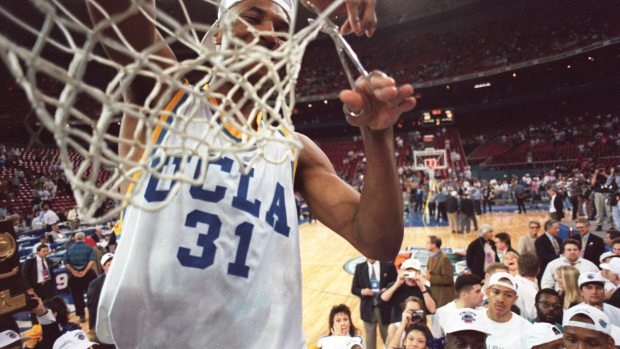

Source: http://philadelphia.cbslocal.com/2013/09/27/ea-sports-settles-college-likeness-case/ More...


The Olympic Agenda 2020: The devil is in the implementation!

The 40 recommendations of the Olympic Agenda 2020 are out! First thought: one should not underplay the 40 recommendations, they constitute (on paper at least) a potential leap forward for the IOC. The media will focus on the hot stuff: the Olympic channel, the pluri-localisation of the Games, or their dynamic format. More importantly, and to some extent surprisingly to us, however, the IOC has also fully embraced sustainability and good governance. Nonetheless, the long-term legacy of the Olympic Agenda 2020 will hinge on the IOC’s determination to be true to these fundamental commitments. Indeed, the devil is always in the implementation, and the laudable intents of some recommendations will depend on future political choices by Olympic bureaucrats. 

For those interested in human rights and democracy at (and around) the Olympics, two aspects are crucial: the IOC’s confession that the autonomy of sport is intimately linked to the quality of its governance standards and the central role the concept of sustainability is to play in the bidding process and the host city contract.  More...

UEFA’s tax-free Euro 2016 in France: State aid or no State aid?

Last week, the French newspaper Les Echos broke the story that UEFA (or better said its subsidiary) will be exempted from paying taxes in France on revenues derived from Euro 2016. At a time when International Sporting Federations, most notably FIFA, are facing heavy criticisms for their bidding procedures and the special treatment enjoyed by their officials, this tax exemption was not likely to go unnoticed. The French minister for sport, confronted with an angry public opinion, responded by stating that tax exemptions are common practice regarding international sporting events. The former French government agreed to this exemption. In fact, he stressed that without it “France would never have hosted the competition and the Euro 2016 would have gone elsewhere”. More...

The New Olympic Host City Contract: Human Rights à la carte? by Ryan Gauthier, PhD Researcher (Erasmus University Rotterdam)

Three weeks ago, I gave a talk for a group of visiting researchers at Harvard Law School on the accountability of the IOC for human rights abuses caused by hosting Olympic Games. On the day of that talk, Human Rights Watch announced that the International Olympic Committee (“IOC”) would insert new language into the Host City Contract presumably for the 2022 Olympic Games onwards. The new language apparently requires the parties to the contract to:

“take all necessary measures to ensure that development projects necessary for the organization of the Games comply with local, regional, and national legislation, and international agreements and protocols, applicable in the host country with regard to planning, construction, protection of the environment, health, safety, and labour laws.”More...

Asser International Sports Law Blog | Our International Sports Law Diary <br/>The <a href="http://www.sportslaw.nl" target="_blank">Asser International Sports Law Centre</a> is part of the <a href="https://www.asser.nl/" target="_blank"><img src="/sportslaw/blog/media/logo_asser_horizontal.jpg" style="vertical-align: bottom; margin-left: 7px;width: 140px" alt="T.M.C. Asser Instituut" /></a>

Asser International Sports Law Blog

Our International Sports Law Diary
The Asser International Sports Law Centre is part of the T.M.C. Asser Instituut

Blog Symposium: The Impact of the TPO Ban on South American Football. By Ariel N. Reck

Introduction: FIFA’s TPO ban and its compatibility with EU competition law.
Day 1: FIFA must regulate TPO, not ban it.
Day 2: Third-party entitlement to shares of transfer fees: problems and solutions
Day 4: Third Party Investment from a UK Perspective.
Day 5: Why FIFA's TPO ban is justified.

Editor’s note: Ariel N. Reck is an Argentine lawyer specialized in the football industry. He is a guest professor at ISDE’s Global Executive Master in International Sports Law, at the FIFA CIES Sports law & Management course (Universidad Católica Argentina) and the Universidad Austral Sports Law diploma (Argentina) among other prestigious courses. He is a regular conference speaker and author in the field of sports law.

Being an Argentine lawyer, Ariel will focus on the impact FIFA’s TPO ban will have (and is already having) on South American football.More...


Blog Symposium: Third-party entitlement to shares of transfer fees: problems and solutions - By Dr. Raffaele Poli (Head of CIES Football Observatory)

Introduction: FIFA’s TPO ban and its compatibility with EU competition law.
Day 1: FIFA must regulate TPO, not ban it.
Day 3: The Impact of the TPO Ban on South American Football.
Day 4: Third Party Investment from a UK Perspective.
Day 5: Why FIFA's TPO ban is justified.

Editor’s note: Raffaele Poli is a human geographer. Since 2002, he has studied the labour and transfer markets of football players. Within the context of his PhD thesis on the transfer networks of African footballers, he set up the CIES Football Observatory based at the International Centre for Sports Studies (CIES) located in Neuchâtel, Switzerland. Since 2005, this research group develops original research in the area of football from a multidisciplinary perspective combining quantitative and qualitative methods. Raffaele was also involved in a recent study on TPO providing FIFA with more background information on its functioning and regulation (the executive summary is available here).

This is the third blog of our Symposium on FIFA’s TPO ban, it is meant to provide an interdisciplinary view on the question. Therefore, it will venture beyond the purely legal aspects of the ban to introduce its social, political and economical context and the related challenges it faces. More...


Blog Symposium: FIFA must regulate TPO, not ban it. The point of view of La Liga.

Introduction: FIFA’s TPO ban and its compatibility with EU competition law.
Day 2: Third-party entitlement to shares of transfer fees: problems and solutions
Day 3: The Impact of the TPO Ban on South American Football.
Day 4: Third Party Investment from a UK Perspective.
Day 5: Why FIFA's TPO ban is justified.

Editor's note: This is the first blog of our symposium on FIFA's TPO ban, it features the position of La Liga regarding the ban and especially highlights some alternative regulatory measures it would favour. La Liga has launched a complaint in front of the European Commission challenging the compatibility of the ban with EU law, its ability to show that realistic less restrictive alternatives were available is key to winning this challenge. We wish to thank La Liga for sharing its legal (and political) analysis of FIFA's TPO ban with us.

INTRODUCTION

The Spanish Football League (La Liga) has argued for months that the funding of clubs through the conveyance of part of players' economic rights (TPO) is a useful practice for clubs. However, it also recognized that the practice must be strictly regulated. In July 2014, it approved a provisional regulation that was sent to many of the relevant stakeholders, including FIFA’s Legal Affairs Department. More...


Blog Symposium: FIFA’s TPO ban and its compatibility with EU competition law - Introduction - Antoine Duval & Oskar van Maren

Day 1: FIFA must regulate TPO, not ban it.
Day 2: Third-party entitlement to shares of transfer fees: problems and solutions
Day 3: The Impact of the TPO Ban on South American Football.
Day 4: Third Party Investment from a UK Perspective.
Day 5: Why FIFA's TPO ban is justified.

On 22 December 2014, FIFA officially introduced an amendment to its Regulations on the Status and Transfers of Players banning third-party ownership of players’ economic rights (TPO) in football. This decision to put a definitive end to the use of TPO in football is controversial, especially in countries where TPO is a mainstream financing mechanism for clubs, and has led the Portuguese and Spanish football leagues to launch a complaint in front of the European Commission, asking it to find the FIFA ban contrary to EU competition law.

Next week, we will feature a Blog Symposium discussing the FIFA TPO ban and its compatibility with EU competition law. We are proud and honoured to welcome contributions from both the complainant (the Spanish football league, La Liga) and the defendant (FIFA) and three renowned experts on TPO matters: Daniel Geey ( Competition lawyer at Fieldfisher, aka @FootballLaw), Ariel Reck (lawyer at Reck Sports law in Argentina, aka @arielreck) and Raffaele Poli (Social scientist and head of the CIES Football Observatory). The contributions will focus on different aspects of the functioning of TPO and on the impact and consequences of the ban. More...


The CAS and Mutu - Episode 4 - Interpreting the FIFA Transfer Regulations with a little help from EU Law

On 21 January 2015, the Court of arbitration for sport (CAS) rendered its award in the latest avatar of the Mutu case, aka THE sports law case that keeps on giving (this decision might still be appealed to the Swiss Federal tribunal and a complaint by Mutu is still pending in front of the European Court of Human Right). The decision was finally published on the CAS website on Tuesday. Basically, the core question focuses on the interpretation of Article 14. 3 of the FIFA Regulations on the Status and Transfer of Players in its 2001 version. More precisely, whether, in case of a dismissal of a player (Mutu) due to a breach of the contract without just cause by the player, the new club (Juventus and/or Livorno) bears the duty to pay the compensation due by the player to his former club (Chelsea). Despite winning maybe the most high profile case in the history of the CAS, Chelsea has been desperately hunting for its money since the rendering of the award (as far as the US), but it is a daunting task. Thus, the English football club had the idea to turn against Mutu’s first employers after his dismissal in 2005, Juventus and Livorno, with success in front of the FIFA Dispute Resolution Chamber (DRC), but as we will see the CAS decided otherwise[1]. More...

The UCI Report: The new dawn of professional cycling?

The world of professional cycling and doping have been closely intertwined for many years. Cycling’s International governing Body, Union Cycliste Internationale (UCI), is currently trying to clean up the image of the sport and strengthen its credibility. In order to achieve this goal, in January 2014 the UCI established the Cycling Independent Reform Commission (CIRC) “to conduct a wide ranging independent investigation into the causes of the pattern of doping that developed within cycling and allegations which implicate the UCI and other governing bodies and officials over ineffective investigation of such doping practices.”[1] The final report was submitted to the UCI President on 26 February 2015 and published on the UCI website on 9 March 2015. The report outlines the history of the relationship between cycling and doping throughout the years. Furthermore, it scrutinizes the role of the UCI during the years in which doping usage was at its maximum and addresses the allegations made against the UCI, including allegations of corruption, bad governance, as well as failure to apply or enforce its own anti-doping rules. Finally, the report turns to the state of doping in cycling today, before listing some of the key practical recommendations.[2]

Since the day of publication, articles and commentaries (here and here) on the report have been burgeoning and many of the stakeholders have expressed their views (here and here). However, given the fact that the report is over 200 pages long, commentators could only focus on a limited number of aspects of the report, or only take into account the position of a few stakeholders. In the following two blogs we will try to give a comprehensive overview of the report in a synthetic fashion.

This first blogpost will focus on the relevant findings and recommendations of the report. In continuation, a second blogpost will address the reforms engaged by the UCI and other long and short term consequences the report could have on professional cycling. Will the recommendations lead to a different governing structure within the UCI, or will the report fundamentally change the way the UCI and other sport governing bodies deal with the doping problem? More...

Book Review - Camille Boillat & Raffaele Poli: Governance models across football associations and leagues (2014)

Camille Boillat & Raffaele Poli: Governance models across football associations and leagues (2014)

Vol. 4, Centre International d'Etude du Sport, Neuchâtel, Switzerland, softback, 114 pages, ISBN 2-940241-24-4, Price: €24


Source: http://www.cies.ch/en/cies/news/news/article/new-publication-in-the-collection-editions-cies-governance-models-across-football-associations-an/

More...


The aftermath of the Pechstein ruling: Can the Swiss Federal Tribunal save CAS arbitration? By Thalia Diathesopoulou

It took only days for the de facto immunity of the Court of Arbitration for Sport (CAS) awards from State court interference to collapse like a house of cards on the grounds of the public policy exception mandated under Article V(2)(b) of the New York Convention on the Recognition and Enforcement of Foreign Arbitral Awards . On 15 January 2015, the Munich Court of Appeals signalled an unprecedented turn in the longstanding legal dispute between the German speed skater, Claudia Pechstein, and the International Skating Union (ISU). It refused to recognise a CAS arbitral award, confirming the validity of a doping ban, on the grounds that it violated a core principle of German cartel law which forms part of the German public policy. A few weeks before, namely on 30 December 2014, the Court of Appeal of Bremen held a CAS award, which ordered the German Club, SV Wilhelmshaven, to pay ‘training compensation’, unenforceable for non-compliance with mandatory European Union law and, thereby, for violation of German ordre public. More...

‘The reform of football': Yes, but how? By Marco van der Harst

'Can't fight corruption with con tricks
They use the law to commit crime
And I dread, dread to think what the future will bring
When we're living in gangster time'
The Specials - Gangsters


The pressing need for change 

The Parliamentary Assembly (PACE) of the Council of Europe (CoE), which is composed of 318 MPs chosen from the national parliaments of the 47 CoE member states, unanimously adopted a report entitled ‘the reform of football’ on January 27, 2015. A draft resolution on the report will be debated during the PACE April 2015 session and, interestingly, (only?) FIFA’s president Sepp Blatter has been sent an invitation

The PACE report highlights the pressing need of reforming the governance of football by FIFA and UEFA respectively. Accordingly, the report contains some interesting recommendations to improve FIFA’s (e.g., Qatargate[1]) and UEFA’s governance (e.g., gender representation). Unfortunately, it remains unclear how the report’s recommendations will actually be implemented and enforced. 

The report is a welcomed secondary effect of the recent Qatargate directly involving former FIFA officials such as Jack Warner, Chuck Blazer, and Mohamed Bin Hammam[2] and highlighting the dramatic failures of FIFA’s governance in putting its house in order. Thus, it is undeniably time to correct the governance of football by FIFA and its confederate member UEFA – nolens volens. The real question is how to do it.


            Photograph: Fabrice Coffrini/AFP/Getty Images                   Photograph: Octav Ganea/AP

More...


SV Wilhelmshaven: a Rebel with a cause! Challenging the compatibility of FIFA’s training compensation system with EU law

Due to the legitimate excitement over the recent Pechstein ruling, many have overlooked a previous German decision rendered in the Wilhelmshaven SV case (the German press did report on the decision here and here). The few academic commentaries (see here and here) focused on the fact that the German Court had not recognized the res judicata effect of a CAS award. Thus, it placed Germany at the spearhead of a mounting rebellion against the legitimacy of the CAS and the validity of its awards. None of the commentators weighed in on the substance of the decision, however. Contrary to the Court in Pechstein, the judges decided to evaluate the compatibility of the FIFA rules on training compensations with the EU free movement rights. To properly report on the decision and assess the threat it may constitute for the FIFA training compensation system, we will first summarize the facts of the case (I), briefly explicate the mode of functioning of the FIFA training compensation system (II), and finally reconstruct the reasoning of the Court on the compatibility of the FIFA rules with EU law (III).More...