Asser International Sports Law Blog

Our International Sports Law Diary
The Asser International Sports Law Centre is part of the T.M.C. Asser Instituut

Blog Symposium: The impact of the revised World Anti-Doping Code on the work of National Anti-Doping Agencies. By Herman Ram

Introduction: The new WADA Code 2015
Day 2: The “Athlete Patient” and the 2015 World Anti-Doping Code: Competing Under Medical Treatment
Day 3: Proof of intent (or lack thereof) under the 2015 World Anti-Doping Code
Day 4: Ensuring proportionate sanctions under the 2015 World Anti-Doping Code

Editor's note
Herman Ram is the Chief Executive Officer of the Anti-Doping Authority the Netherlands, which is the National Anti-Doping Organization of the country. He has held this position since 2006. After working twelve years as a librarian, Herman Ram started his career in sport management in 1992, when he became Secretary general of the Royal Netherlands Chess Federation. In 1994, he moved on to the same position at the Netherlands Badminton Federation. He was founder and first secretary of the Foundation for the Promotion of Elite Badminton that was instrumental in the advancement of Dutch badminton. In 2000 he was appointed Secretary general of the Netherlands Ski Federation, where he focused, among other things, on the organization of large snowsports events in the Netherlands. Since his appointment as CEO of the Anti-Doping Authority, he has developed a special interest in legal, ethical and managerial aspects of anti-doping policies, on which he has delivered numerous presentations and lectures. On top of that, he acts as Spokesperson for the Doping Authority. Herman Ram holds two Master’s degrees, in Law and in Sport Management. More...


Blog Symposium: The new WADA Code 2015 - Introduction

Day 1: The impact of the revised World Anti-Doping Code on the work of National Anti-Doping Agencies
Day 2: The “Athlete Patient” and the 2015 World Anti-Doping Code: Competing Under Medical Treatment
Day 3: Proof of intent (or lack thereof) under the 2015 World Anti-Doping Code
Day 4: Ensuring proportionate sanctions under the 2015 World Anti-Doping Code

On 1 January, a new version of the World Anti-Doping Code (WADC or Code) entered into force. This blog symposium aims at taking stock of this development and at offering a preliminary analysis of the key legal changes introduced. The present blog will put the WADC into a more general historical and political context. It aims to briefly retrace the emergence of the World Anti-Doping Agency (WADA) and its Code. It will also reconstruct the legislative process that led to the adoption of the WADC 2015 and introduce the various contributions to the blog symposium.More...


Interview with Wil van Megen (Legal Director of FIFPro) on FIFPro’s EU Competition Law complaint against the FIFA Transfer System

Editor’s note
Wil is working as a lawyer since 1980. He started his legal career at Rechtshulp Rotterdam. Later on he worked for the Dutch national trade union FNV and law firm Varrolaan Advocaten. Currently he is participating in the Labour Law Section of lawfirm MHZ-advocaten in Schiedam in the Netherlands. He is also a member of a joint committee advising the government in labour issues.

Since 1991 he is dealing with the labour issues of the trade union for professional football players VVCS and cyclists’ union VVBW. Since 2002, he works for FIFPro, the worldwide union for professional football players based in Hoofddorp in the Netherlands. He is involved in many international football cases and provides legal support for FIFPro members all over the world. Wil was also involved in the FIFPro Black Book campaign on match fixing and corruption in Eastern Europe. More...


Why the CAS #LetDuteeRun: the Proportionality of the Regulation of Hyperandrogenism in Athletics by Piotr Drabik

Editor's note
Piotr is an intern at the ASSER International Sports Law Centre.

Introduction

On 24 July the Court of Arbitration for Sport (CAS) issued its decision in the proceedings brought by the Indian athlete Ms. Dutee Chand against the Athletics Federation of India (AFI) and the International Association of Athletics Federations (IAAF) in which she challenged the validity of the IAAF Regulations Governing Eligibility of Female with Hyperandrogenism to Compete in Women’s Competition (Regulations). The Regulations were established in 2011 as a response to the controversies surrounding South African athlete Caster Semenya (see e.g. here, here, and here), and for the purpose of safeguarding fairness in sport by prohibiting women with hyperandrogenism, i.e. those with excessive levels of endogenous (naturally occurring) testosterone, from competing in women athletics competitions. Owing to the subject-matter that the Regulations cover, the case before the CAS generated complex legal, scientific and ethical questions. The following case note thus aims at explaining how the Panel addressed the issues raised by the Indian athlete. It follows a previous blog we published in December 2014 that analysed the arguments raised in favour of Ms. Chand. More...


EU Law is not enough: Why FIFA's TPO ban survived its first challenge before the Brussels Court


Star Lawyer Jean-Louis Dupont is almost a monopolist as far as high profile EU law and football cases are concerned. This year, besides a mediatised challenge against UEFA’s FFP regulations, he is going after FIFA’s TPO ban on behalf of the Spanish and Portuguese leagues in front of the EU Commission, but also before the Brussels First Instance Court defending the infamous Malta-based football investment firm Doyen Sport. FIFA and UEFA’s archenemy, probably electrified by the 20 years of the Bosman ruling, is emphatically trying to reproduce his world-famous legal prowess. Despite a first spark at a success in the FFP case against UEFA with the Court of first instance of Brussels sending a preliminary reference to the Court of Justice of the EU (CJEU), this has proven to be a mirage as the CJEU refused, as foretold, to answer the questions of the Brussels Court, while the provisory measures ordered by the judge have been suspended due to UEFA’s appeal. But, there was still hope, the case against FIFA’s TPO ban, also involving UEFA and the Belgium federation, was pending in front of the same Brussels Court of First Instance, which had proven to be very willing to block UEFA’s FFP regulations. Yet, the final ruling is another disappointment for Dupont (and good news for FIFA). The Court refused to give way to Doyen’s demands for provisional measures and a preliminary reference. The likelihood of a timely Bosman bis repetita is fading away. Fortunately, we got hold of the judgment of the Brussels court and it is certainly of interest to all those eagerly awaiting to know whether FIFA’s TPO ban will be deemed compatible or not with EU law. More...


A Bridge Too Far? Bridge Transfers at the Court of Arbitration for Sport. By Antoine Duval and Luis Torres.

FIFA’s freshly adopted TPO ban entered into force on 1 May (see our Blog symposium). Though it is difficult to anticipate to what extent FIFA will be able to enforce the ban, it is likely that many of the third-party investors will try to have recourse to alternative solutions to pursue their commercial involvement in the football transfer market. One potential way to circumvent the FIFA ban is to use the proxy of what has been coined “bridge transfers”. A bridge transfer occurs when a club is used as an intermediary bridge in the transfer of a player from one club to another. The fictitious passage through this club is used to circumscribe, for example, the payment of training compensation or to whitewash a third-party ownership by transforming it into a classical employment relationship. This is a legal construction that has gained currency especially in South American football, but not only. On 5 May 2015, in the Racing Club v. FIFA case, the Court of Arbitration for Sport (CAS) rendered its first award involving directly a bridge transfer. As this practice could become prevalent in the coming years we think that this case deserves a close look. More...

20 Years After Bosman - The New Frontiers of EU Law and Sport - Special Issue of the Maastricht Journal of European and Comparative Law

Editor's note: This is a short introduction written for the special Issue of the Maastricht Journal of European and Comparative Law celebrating the 20 years of the Bosman ruling and dedicated to the new frontiers of EU law and Sport (the articles are available here). For those willing to gain a deeper insight into the content of the Issue we organize (in collaboration with Maastricht University and the Maastricht Journal) a launching event with many of the authors in Brussels tomorrow (More info here).More...

ASSER Exclusive! Interview with Charles “Chuck” Blazer by Piotr Drabik

Editor’s note: Chuck Blazer declined our official interview request but thanks to some trusted sources (the FIFA indictment and Chuck’s testimony) we have reconstructed his likely answers. This is a fictional interview. Any resemblance with real facts is purely coincidental.



Mr Blazer, thank you for agreeing to this interview, especially considering the circumstances. How are you doing?

I am facing ten charges concerning, among others, conspiracy to corrupt and money laundering. But apart from that, I am doing great (laughs)!


It is good to know that you have not lost your spirit. And since you’ve been involved in football, or as you call it soccer, for years could you please first tell us what was your career at FIFA and its affiliates like?

Let me see… Starting from the 1990s I was employed by and associated with FIFA and one of its constituent confederations, namely the Confederation of North, Central American and Caribbean Association Football (CONCACAF). At various times, I also served as a member of several FIFA standing committees, including the marketing and television committee. As CONCACAF’s general secretary, a position I proudly held for 21 years, I was responsible, among many other things, for negotiations concerning media and sponsorship rights. From 1997 to 2013 I also served at FIFA’s executive committee where I participated in the selection process of the host countries for the World Cup tournaments. Those years at the helm of world soccer were truly amazing years of travel and hard work mainly for the good of the beautiful game. I might add that I even managed to document some of my voyages on my blog. I initially called it “Travels with Chuck Blazer” but Vladimir (Putin) convinced me to change the name to “Travels with Chuck Blazer and his Friends”. You should check it out.

 More...


Book Review: Reforming FIFA, or Not

Editor’s note: This short book review will be published in a different format in the International Sports Law Journal, due to its timeliness we decided to reproduce it here. 

Reforming FIFA, or Not

 Antoine Duval

Book Review: Mark Pieth (ed.), Reforming FIFA, Dike Verlag, St. Gallen, 2014, 28.00 CHF, p.178
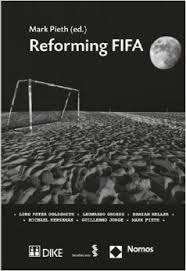


This book looks back at the work of the Independence Governance Committee (IGC). This Committee, constituted in 2011, had as primary objective to drive a reform process of FIFA initiated by its President Sepp Blatter. After ordering from the Swiss anti-corruption expert Mark Pieth, a report on the state of FIFA’s governance, FIFA decided to mandate him with the leadership of a consulting body composed of a mix of independent experts and football insiders, which would be accompanying and supervising the internal reform process of FIFA. The IGC was officially dissolved at the end of 2013, after completing its mandate. The book is composed of eight chapters, written by former members of the IGC, including former chairman Mark Pieth. In addition to the chapters, it includes the different reports (available here, here and here) submitted by the IGC to FIFA across the years. In the words of Pieth, this account is “fascinating because it gives a hands-on, realistic perspective of the concrete efforts, the achievements and the remaining challenges in the struggle for the reform of this organization [FIFA], avoiding the usual glorification or vilification.”[1] This review will first summarize the core of the account of the FIFA reform process provided by the book, before critically engaging with the outcome of the process and outlining the deficiencies that culminated on 29 May 2015 with the re-election of Sepp Blatter as FIFA president.More...


Is FIFA fixing the prices of intermediaries? An EU competition law analysis - By Georgi Antonov (ASSER Institute)

Introduction

On 1 April 2015, the new FIFA Regulations on Working with Intermediaries (hereinafter referred as the Regulations) came into force. These Regulations introduced a number of changes as regards the division of competences between FIFA and its members, the national associations. A particularly interesting issue from an EU competition law perspective is the amended Article 7 of the Regulations. Under paragraph 3, which regulates the rules on payments to intermediaries (also previously referred to as ‘agents’), it is recommended that the total amount of remuneration per transaction due to intermediaries either being engaged to act on a player’s or club’s behalf should not exceed 3% of the player’s basic gross income for the entire duration of the relevant employment contract. In the case of transactions due to intermediaries who have been engaged to act on a club’s behalf in order to conclude a transfer agreement, the total amount of remuneration is recommended to not exceed 3% of the eventual transfer fee paid in relation to the relevant transfer of the player.More...

Asser International Sports Law Blog | All posts by antoine-duval

Asser International Sports Law Blog

Our International Sports Law Diary
The Asser International Sports Law Centre is part of the T.M.C. Asser Instituut

Sporting nationality and the Olympic Games: selected issues by Yann Hafner (University of Neuchâtel)

Editor’s note: Yann Hafner is a Phd researcher at the University of Neuchâtel specialized in sports and nationality issues. He is also Legal Affairs Manager at the Fédération Internationale de Volleyball. Yann is an editor of the ASSER International Sports Law Blog and has previously published on the blog on nationality conundrums at the FIFA World Cup 2014 in Brazil (see here).  

This contribution aims to decipher the relationship between sporting nationality and the Olympic Games. To this end, the author will first define sporting nationality and discuss athletes’ eligibility in national team in the context of the Olympic Games. Then, selected issues in relation with sporting nationality and the Olympic Games (with an emphasis on issues related to the Rio 2016 Olympic Games) will be investigated. More...


Regulating the human body in sports: Lessons learned from the Dutee Chand case - by Dr Marjolaine Viret & Emily Wisnosky

Editor's note: Marjolaine Viret and Emily Wisnosky are both editors of the ASSER International Sports Law Blog specialized in anti-doping matters, they are also involved in the World Anti-Doping Commentary project funded by the Swiss National Science Fund.

Introduction

A remarkable aspect of the run-up to the 2016 Rio Olympic Games was the stream of negative media reports portraying broad-scale public mistrust in sport, with the most prominent topic being the doping scandals in athletics and questions surrounding the participation of Russia.  

A different controversy, but one also directed at the credibility of sports, has exposed a few female Olympians to repeated, and at times rather intrusive, media scrutiny. In June 2016, it was reported that Indian track-and-field athlete Dutee Chand had qualified for the Rio Olympic Games by breaking the national record, thus to become the first Indian athlete to run the 100m at the Olympics since 1980. The attention that Dutee Chand’s qualification attracted within international media, however, was not related only to her outstanding results. It came as part of a medical, ethical and legal controversy that has existed for many years relating to ‘policing’ the male versus female divide in sports. Another athlete who has found herself in the midst of this controversy is South African runner Semenya Caster, whose participation in the Olympics has been the object of much conjecture.

The divide between male and female athletes forms the core of most sports’ competition rules, including athletics. The justification for this basic divide has rarely been questioned as such, but has been a matter for debate when it comes to handling atypical situations on both sides of the ‘dividing line’ ­ such as ‘transgender’ or ‘intersex’ athletes. A category of athletes that has, especially, been viewed as a challenge to the divide is composed of female athletes affected by ‘hyperandrogenism’, a health condition that results in naturally elevated androgen levels, including testosterone levels.

On 24 July 2015, a CAS panel rendered a decision involving Dutee Chand (“Dutee Chand” or “the Athlete”) that has fuelled the ongoing debate about the policies regulating hyperandrogenism in sport. Much has been reported in the media about the case: controversial issues include whether the CAS was the appropriate forum to assess these questions; whether the decision was appropriate, both on the merits and on the procedure; and what the consequences of the CAS award would be, for the parties, for athletics and for the sporting community at large.

Much like the current crisis surrounding doping in sports, the public attention on women with (proven or suspected) hyperandrogenism is driven by a concern that an athlete’s physiology – natural or artificially induced ­ could distort competition, destroying the ‘level playing field’ that supports the Olympic ideal. Both topics are also often brought back to the goal of protecting an athlete’s health. Parallels are further found in the strong reactions both topics evoke, and the steps taken by the regulating authorities to convince the public that everything in their power is being done to preserve a level playing field.

A less obvious but equally important point of comparison can be found in the issues both topics raise concerning the legal validity of decisions made by sports organizations, especially in a science-related context. This blog focuses on those more ‘legal’ aspects, through the prism of the decision of the CAS in the Dutee Chand matter and its legal implications. After touching briefly on the background of the case, we will comment on two aspects of the Chand award with respect to challenges in regulating hyperandrogenism in sport within the confines of the law: First from the viewpoint of a CAS panel called upon to evaluate the validity of a set of regulations, and second from the viewpoint of the sports organizations seeking to both adequately protect fairness in sport and to provide a legally valid (and effective) regulatory solution.[1]

More...


International and European Sports Law – Monthly Report – July 2016 - By Marine Montejo

Editor’s note: This report compiles all relevant news, events and materials on International and European Sports Law based on the daily coverage provided on our twitter feed @Sportslaw_asser. You are invited to complete this survey via the comments section below, feel free to add links to important cases, documents and articles we have overlooked. 

The Headlines

The McLaren Report on Russia’s State Doping System

It is difficult not to start this monthly report without referring to the never-ending Russian doping investigation that is shaking the sporting world. On 18 July, the independent investigation on Sochi 2014 winter Olympics led by Prof. McLaren, a Canadian law professor, and requested by the World Anti-Doping Agency (“WADA”), released its report. It confirmed evidence of widespread, State-sponsored doping in Russian sports and called for a full ban on the country from the next Rio Olympics. In response to the report, the International Olympic Committee (“IOC”) vowed to take the “toughest sanctions available”. However, and despite the race against time in the run-up to Rio 2016, the IOC delayed its decision for several days amid a WADA statement and several press articles calling for a ban of Russia from Rio Olympics. Meanwhile, it did open an investigation against Russia’s sports minister, Vitaly Mutko, the head official who allegedly supervised the overall doping cover up and explored all possible legal actions against Russia. On 21 July, the Court of Arbitration for Sport (“CAS”) rejected the appeal of the Russian Olympic Committee and 68 Russian athletes against the International Association of Athletics Federations (“IAAF”) decisions to suspend All Russia Athletics Federation (ARAF) from IAAF membership given the evidence of a state-sponsored doping system. As a consequence, Russian track and field athletes were also banned from Rio 2016 Olympics. With the IAAF welcoming this decision, one could think that nothing was standing in the way of a full Olympic ban for all Russian athletes. While some Russian athletes announced that they would appeal the CAS award to the Swiss Federal Court. Yelena Isinbayeva, the banned pole vault champion, even took it a step further by claiming that she would challenge the IAAF decision as far as the European Court of Human Rights. Yet, it is very improbable that any of these challenges be decided in time for the Rio Games.More...

The BGH’s Pechstein Decision: A Surrealist Ruling


The decision of the Bundesgerichtshof (BGH), the Highest Civil Court in Germany, in the Pechstein case was eagerly awaited. At the hearing in March, the Court decided it would pronounce itself on 7 June, and so it did. Let’s cut things short: it is a striking victory for the Court of Arbitration for Sport (CAS) and a bitter (provisory?) ending for Claudia Pechstein. The BGH’s press release is abundantly clear that the German judges endorsed the CAS uncritically on the two main legal questions: validity of forced CAS arbitration and the independence of the CAS. The CAS and ISU are surely right to rejoice and celebrate the ruling in their respective press releases that quickly ensued (here and here). At first glance, this ruling will be comforting the CAS’ jurisdiction for years to come. Claudia Pechstein’s dire financial fate - she faces up to 300 000€ in legal fees – will serve as a powerful repellent for any athlete willing to challenge the CAS.More...


Guest Blog - Mixed Martial Arts (MMA): Legal Issues by Laura Donnellan

Editor's note: Laura Donnellan is a lecturer at University of Limerick. You can find her latest publications here.


Introduction

On Tuesday the 12th of April, João Carvalho passed away in the Beaumont Hospital after sustaining serious injuries from a mixed martial arts (MMA) event in Dublin on the previous Saturday. The fighter was knocked out in the third round of a welterweight fight against Charlie Ward. Aside from the tragic loss of life, the death of Carvalho raises a number of interesting legal issues. This opinion piece will discuss the possible civil and criminal liability that may result from the untimely death of the Portuguese fighter.

It is important to note at the outset that MMA has few rules and permits wrestling holds, punching, marital arts throws and kicking. MMA appears to have little regulation and a lack of universally accepted, standardised rules. There is no international federation or governing body that regulates MMA. It is largely self-regulated. MMA is not recognised under the sports and governing bodies listed by Sport Ireland, the statutory body established by the Sport Ireland Act 2015 which replaced the Irish Sports Council. MMA is considered a properly constituted sport so long as the rules and regulations are adhered to, there are appropriate safety procedures, the rules are enforced by independent referees, and it appropriately administered.

The Acting Minister for Sport, Michael Ring, has called for the regulation of MMA. Currently there are no minimum requirements when it comes to medical personnel; nor are there any particular requirements as to training of medical personnel. The promoter decides how many doctors and paramedics are to be stationed at events. In February 2014 Minister Ring wrote to 17 MMA promoters in Ireland requesting that they implement safety precautions in line with those used by other sports including boxing and rugby.

Despite this lack of regulation, this does not exempt MMA from legal liability as the discussion below demonstrates.More...


Guest Blog - The Role of Sport in the Recognition of Transgender and Intersex Rights by Conor Talbot

Editor's note: Conor Talbot is a Solicitor at LK Shields Solicitors in Dublin and an Associate Researcher at Trinity College Dublin. He can be contacted at ctalbot@tcd.ie, you can follow him on Twitter at @ConorTalbot and his research is available at www.ssrn.com/author=1369709. This piece was first published on the humanrights.ie blog.

Sport is an integral part of the culture of almost every nation and its ability to shape perceptions and influence public opinion should not be underestimated.  The United Nations has highlighted the potential for using sport in reducing discrimination and inequality, specifically by empowering girls and women.  Research indicates that the benefits of sport include enhancing health and well-being, fostering empowerment, facilitating social inclusion and challenging gender norms.

In spite of the possible benefits, the successful implementation of sport-related initiatives aimed at gender equity involves many challenges and obstacles.  Chief amongst these is the way that existing social constructs of masculinity and femininity — or socially accepted ways of expressing what it means to be a man or woman in a particular socio-cultural context — play a key role in determining access, levels of participation, and benefits from sport.  This contribution explores recent developments in the interaction between transgender and intersex rights and the multi-billion dollar industry that the modern Olympic Games has become.  Recent reports show that transgender people continue to suffer from the glacial pace of change in social attitudes and, while there has been progress as part of a long and difficult journey to afford transgender people full legal recognition through the courts, it seems clear that sport could play an increasingly important role in helping change or better inform social attitudes.More...


Unpacking Doyen’s TPO Deals: The Final Whistle

Footballleaks is now operating since nearly half a year and has already provided an incredible wealth of legal documents both on TPO (and in particular Doyen’s contractual arrangements) and on the operation of the transfer system in football (mainly transfer agreements, player contracts and agents contracts). This constant stream of information is extremely valuable for academic research to get a better grip on the functioning of the transfer market. It is also extremely relevant for the shaping of public debates and political decisions on the regulation of this market. As pointed out on the footballleaks website, it has triggered a series of press investigations in major European news outlets.

In this blog, I want to come to a closure on our reporting on Doyen’s TPO deals. In the past months, we have already dealt with the specific cases of FC Twente and Sporting Lisbon, reviewed Doyen’s TPO deals with Spanish clubs, as well as discussed the compatibility of the TPO ban with EU law. In the Sporting Lisbon case, Doyen has since earned an important legal victory in front of the CAS (the ensuing award was just published by Footballleaks). This victory should not be overstated, however, it was not unexpected due to the liberal understanding of the freedom of contract under Swiss law. As such it does not support the necessity of TPO as an investment practice and does not threaten the legality (especially under EU law) of FIFA’s ban.

In our previous blogs on Doyen’s TPO deals we decided to focus only on specific deals, Twente and Sporting Lisbon, or a specific country (Spain). However, nearly six months after the whole footballleaks project started, we can now provide a more comprehensive analysis of the TPO deals signed by Doyen. Though, it is still possible that other, yet unknown, deals would be revealed, I believe that few of Doyen’s TPO agreements are still hidden. Thanks to footballleaks, we now know how Doyen operates, we have a precise idea of its turnover, its return on investments and the pool of clubs with which it signed a TPO agreement. Moreover, we have a good understanding of the contractual structure used by Doyen in those deals. This blog will offer a brief synthesis and analysis of this data.More...


Doyen’s Crusade Against FIFA’s TPO Ban: The Ruling of the Appeal Court of Brussels

Since last year, Doyen Sports, represented by Jean-Louis Dupont, embarked on a legal crusade against FIFA’s TPO ban. It has lodged a competition law complaint with the EU Commission and started court proceedings in France and Belgium. In a first decision on Doyen’s request for provisory measures, the Brussels Court of First Instance rejected the demands raised by Doyen and already refused to send a preliminary reference to the CJEU. Doyen, supported by the Belgium club Seraing, decided to appeal this decision to the Brussels Appeal Court, which rendered its final ruling on the question on 10 March 2016.[1] The decision (on file with us) is rather unspectacular and in line with the first instance judgment. This blog post will rehash the three interesting aspects of the case.

·      The jurisdiction of the Belgian courts

·      The admissibility of Doyen’s action

·      The conditions for awarding provisory measures More...

International Sports Law in 2015: Our Reader

This post offers a basic literature review on publications on international and European sports law in 2015. It does not have the pretence of being complete (our readers are encouraged to add references and links in the comments under this blog), but aims at covering a relatively vast sample of the 2015 academic publications in the field (we have used the comprehensive catalogue of the Peace Palace Library as a baseline for this compilation). When possible we have added hyperlinks to the source.[1]

Have a good read. More...

Goodbye 2015! The Highlights of our International Sports Law Year

2015 was a good year for international sports law. It started early in January with the Pechstein ruling, THE defining sports law case of the year (and probably in years to come) and ended in an apotheosis with the decisions rendered by the FIFA Ethics Committee against Blatter and Platini. This blog will walk you through the important sports law developments of the year and make sure that you did not miss any. More...